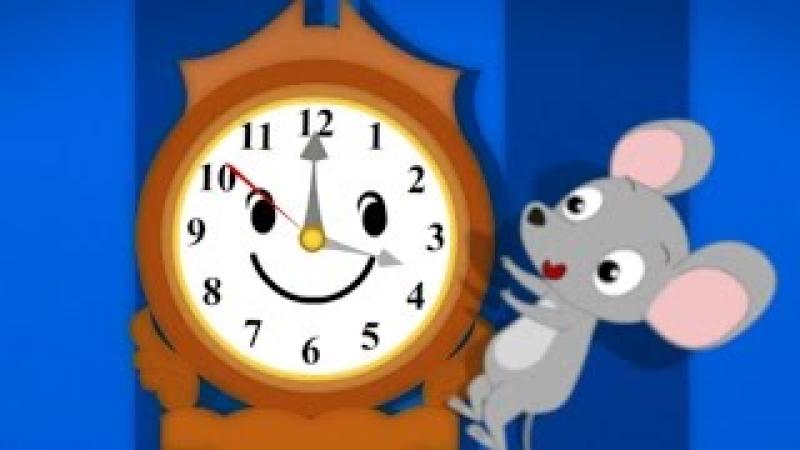
"Hickory Dickory Dock" or "Hickety Dickety Dock" is a popular English nursery rhyme.
The earliest recorded version of the rhyme is in Tommy Thumb's Pretty Song Book, published in London in about 1744, which uses the opening line: 'Hickere, Dickere Dock'. The next recorded version in Mother Goose's Melody (c. 1765), uses 'Dickery, Dickery Dock'.
"Hickory Dickory Dock" Lyrics
The most common modern version is:
Hickory Dickory dock,
The mouse ran up the clock,
The clock struck one
The mouse ran down,
Hickory Dickory dock.
Hickory Dickory dock,
The mouse ran up the clock,
The clock struck two
And down he flew,
Hickory Dickory dock.
Hickory Dickory dock,
The mouse ran up the clock,
The clock struck three
And he did flee,
Hickory Dickory dock.
Hickory Dickory dock,
The mouse ran up the clock,
The clock struck four,
He hit the floor,
Hickory Dickory dock.
Hickory Dickory dock,
The mouse ran up the clock,
The clock struck five,
The mouse took a dive,
Hickory Dickory dock.
Hickory Dickory dock,
The mouse ran up the clock,
The clock struck six,
That mouse, he split,
Hickory Dickory dock.
Hickory Dickory dock,
The mouse ran up the clock,
The clock struck seven,
8, 9, 10, 11,
Hickory Dickory dock.
Hickory Dickory dock,
The mouse ran up the clock,
As twelve bells rang,
The mousie sprang,
Hickory Dickory dock.
Hickory Dickory dock,
"Why scamper?" asked the clock,
"You scare me so
I have to go!
Hickory Dickory dock.
Other variants include "down the mouse ran" or "down the mouse run" or "and down he ran" in place of "the mouse ran down".
"Hickory Dickory Dock" Chords
G       D7      G
Hickory dickory dock
    G         D7     G
The mouse ran up the clock,
                D
The clock struck one,
    C         G
The mouse ran down
G       D7      G
Hickory dickory dock (repeat)
"Hickory Dickory Dock" Origins
The rhyme is thought by some commentators to have originated as a counting-out rhyme. Westmorland shepherds in the nineteenth century used the numbers Hevera (8), Devera (9) and Dick (10).
The rhyme is thought to have been based on the astronomical clock at Exeter Cathedral. The clock has a small hole in the door below the face for the resident cat to hunt mice.
"Hickory Dickory Dock" Youtube Videos